
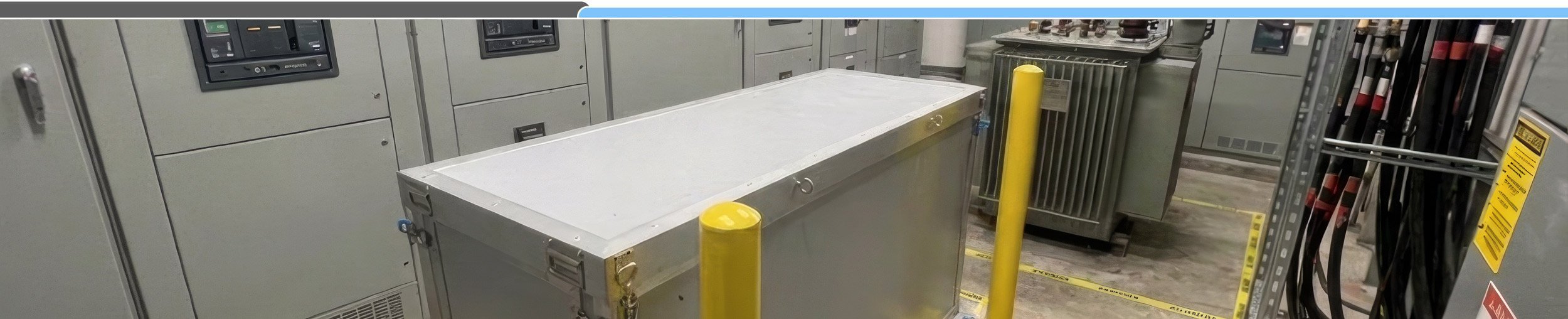
CLAMSHELL™
Equipment Enclosure and Covers
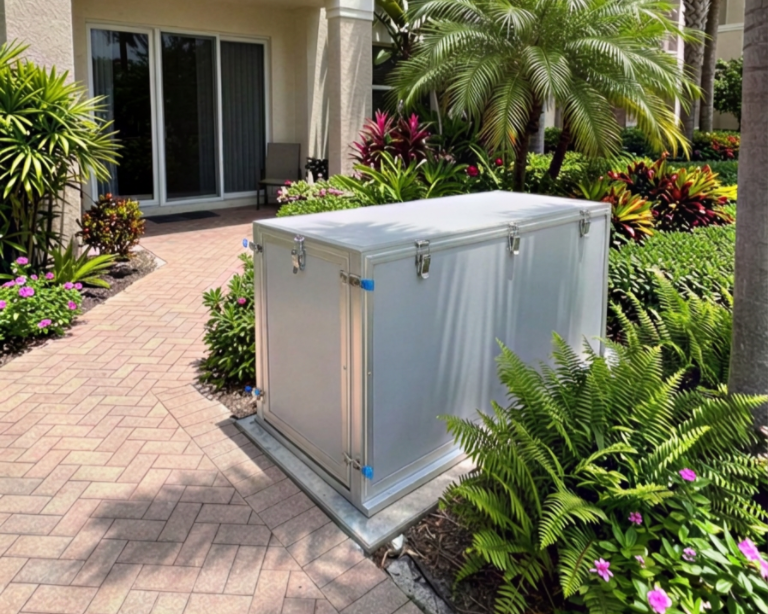
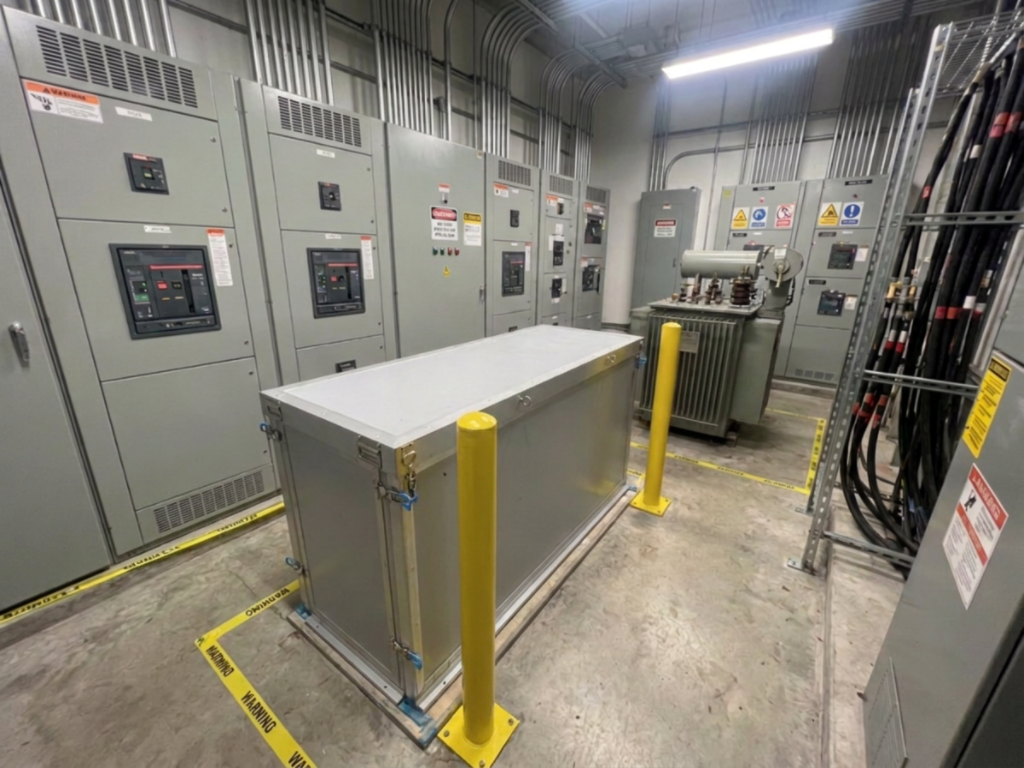
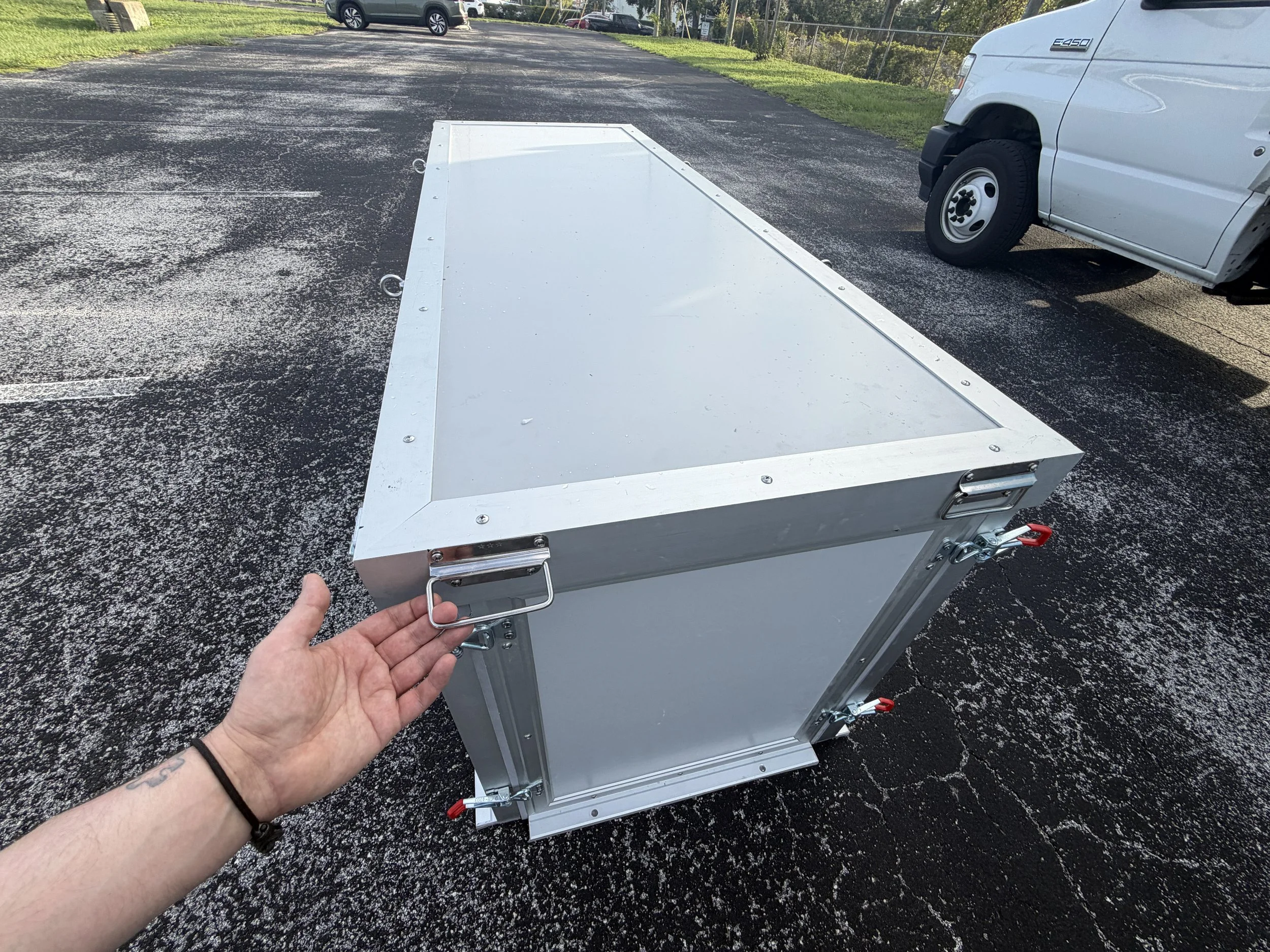

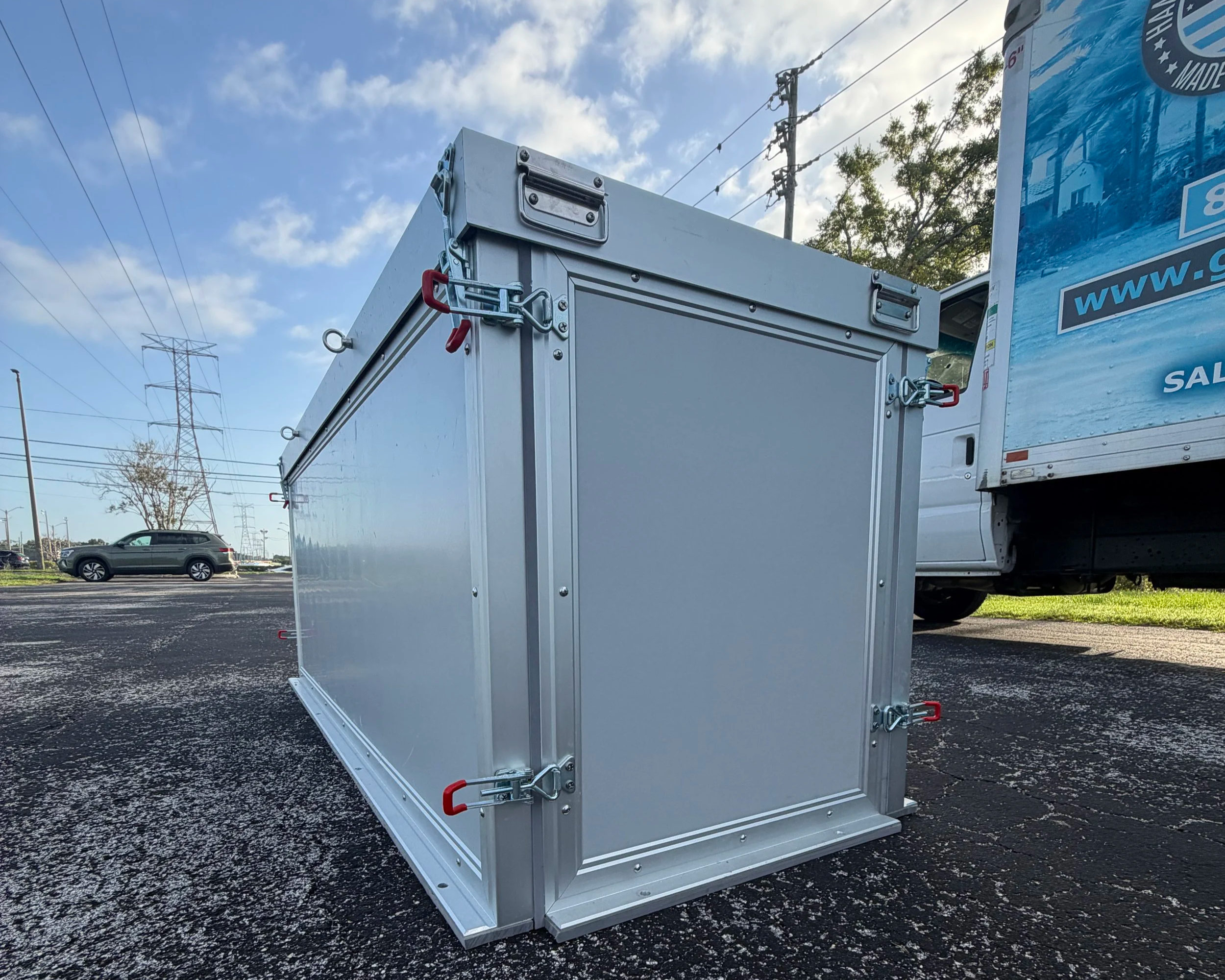


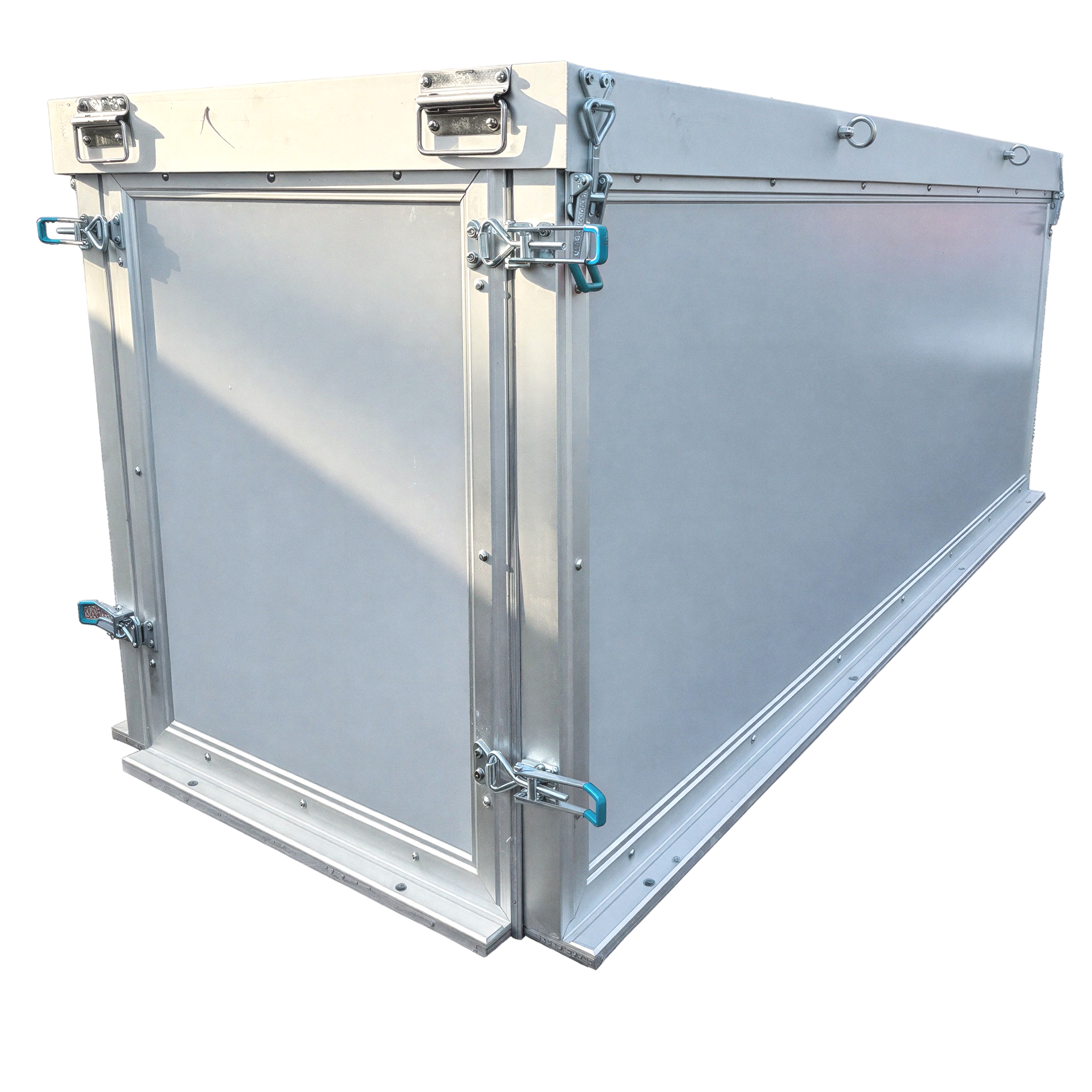
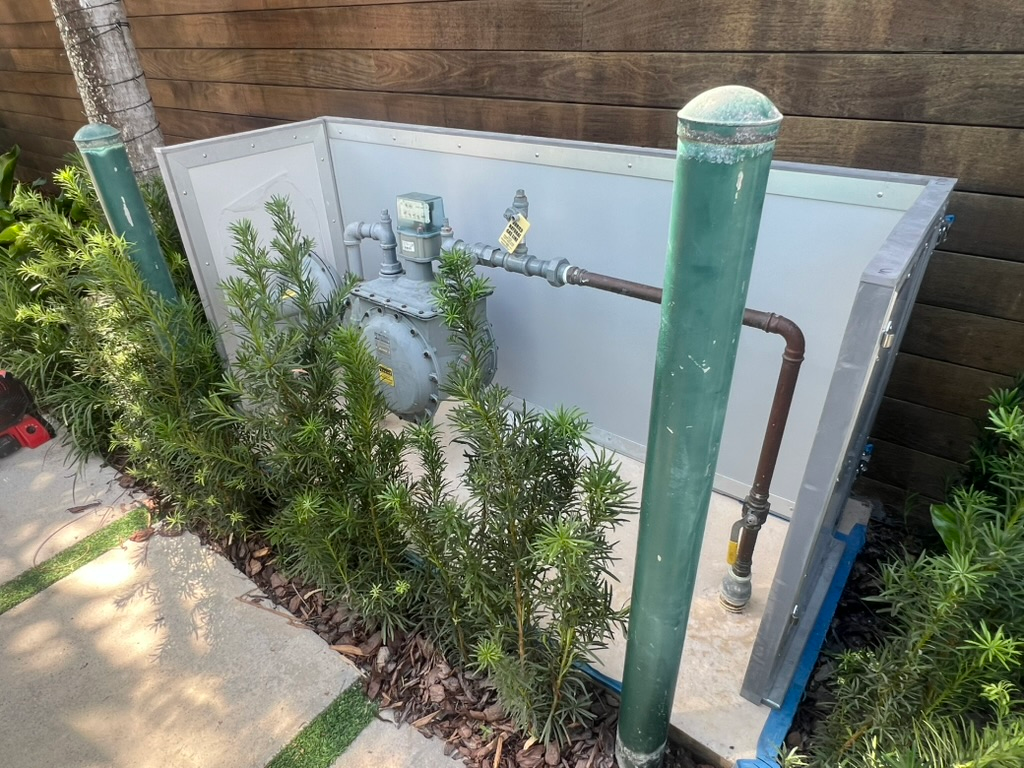
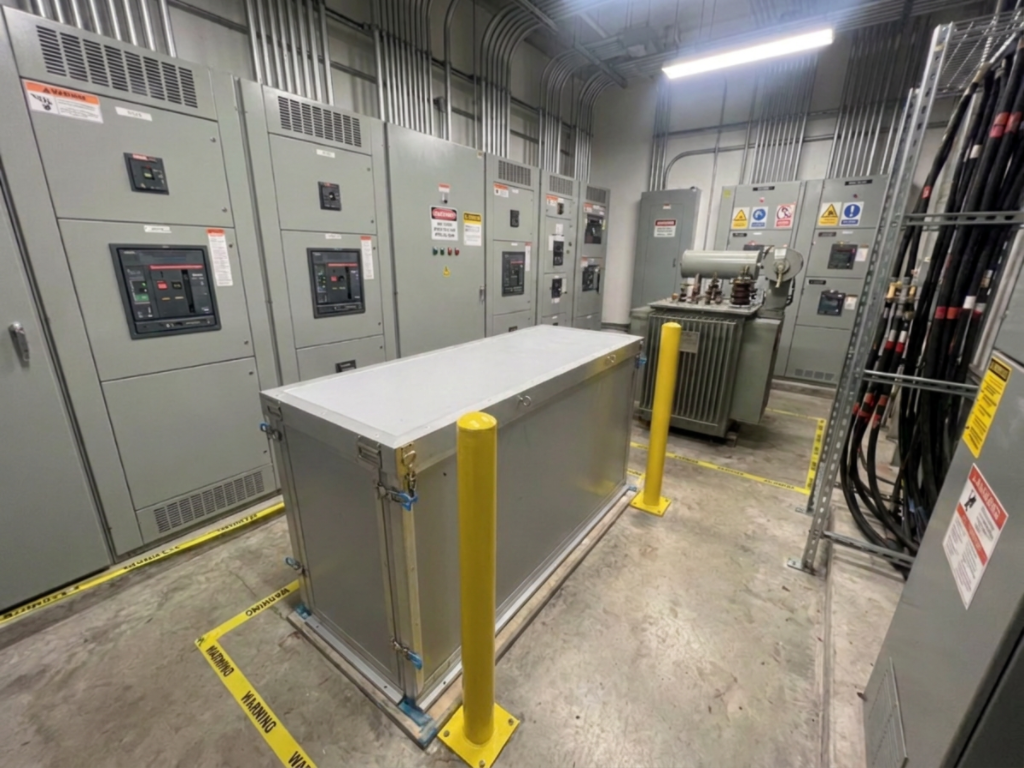
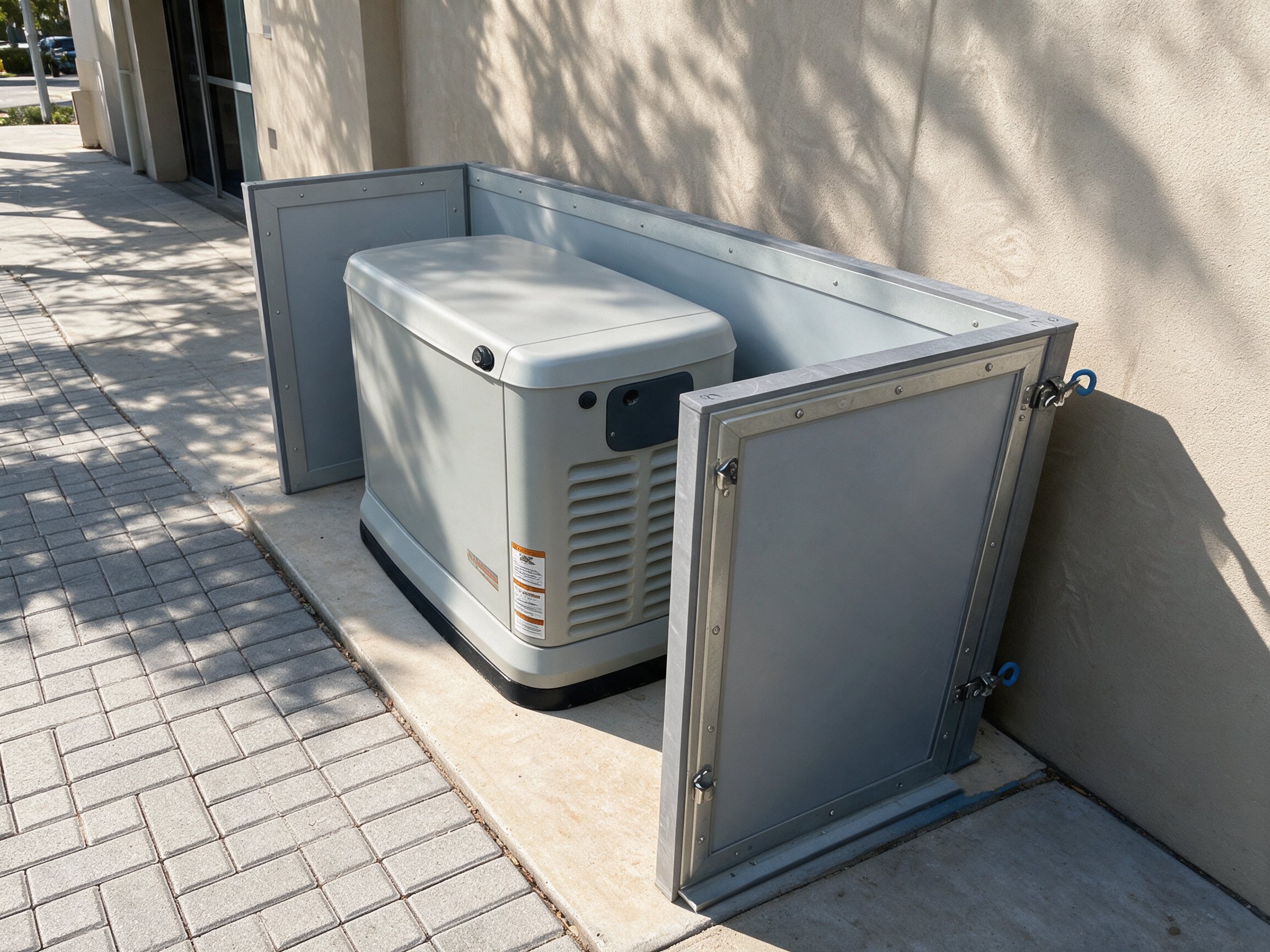
CLAMSHELL™ is a custom-fabricated, watertight enclosure system that provides flood protection directly to, and around any type of equipment, utility pad, generator station, pool equipment pressure-pumps and more.
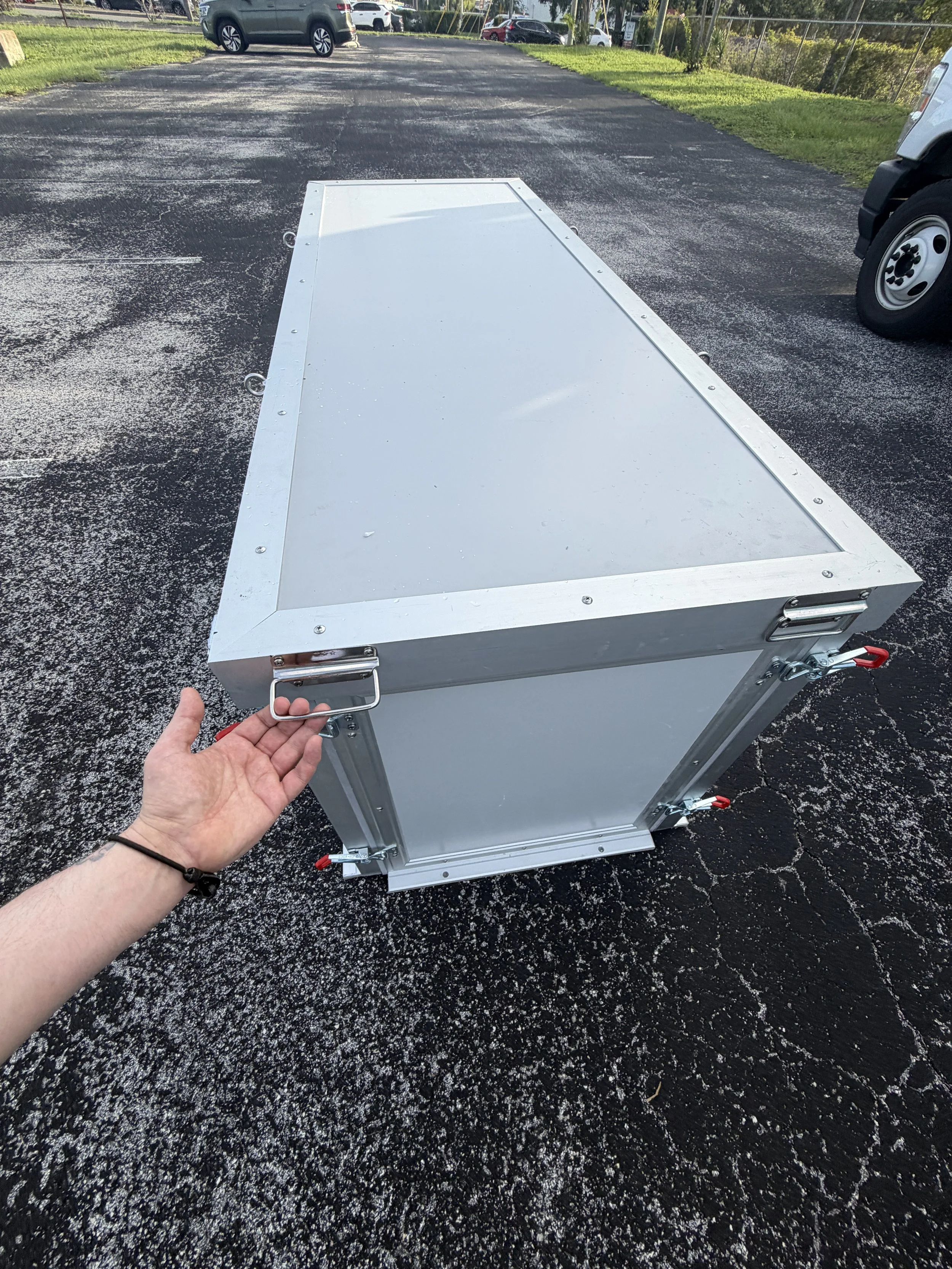
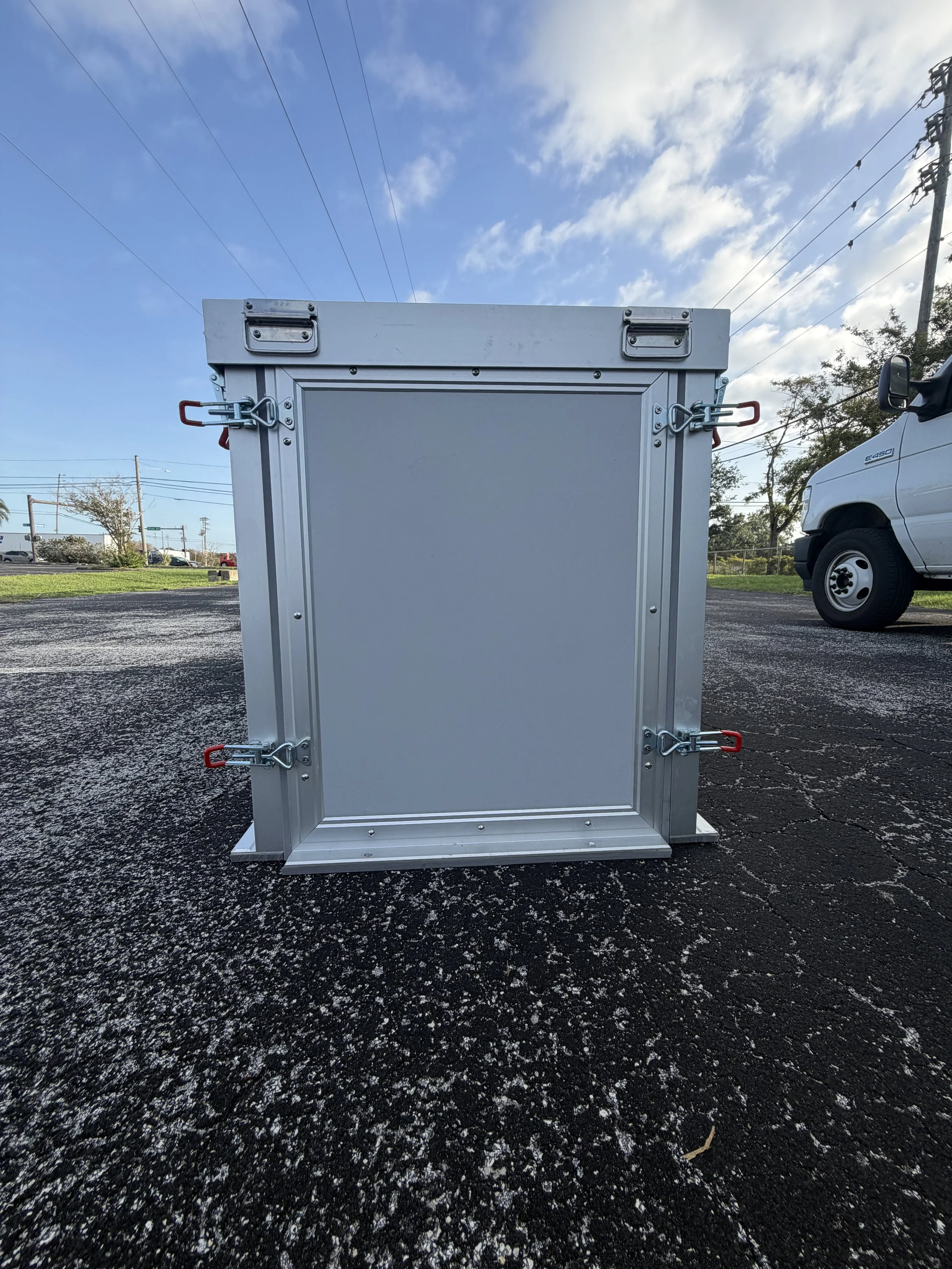
Durable, water-resistant composite flood panels anchor to the equipment pad and lock together at the corners using an industrial latch-lock connector, compressing seals between panels and against the slabs to create a continuous, sealed perimeter protection enclosure.
Constructed from the same fiberglass-reinforced honeycomb composite panels used in our YellowFIN™ flood panel system, with 6063-T6 aluminum framing, compression seals, and 316L marine-grade stainless steel hardware, CLAMSHELL™ rapidly assembles into a sealed enclosure engineered to withstand hydrostatic loads, flowing water, and storm-related debris.


Create a water-tight seal between panel sections using an industrial latch-lock closing mechanism.
Garrison’s CLAMSHELL™ Composite Flood Enclosure System is proudly Made in the USA.

Enclose of cover important equipment and utilities to protect from storms and water intrusion.
How CLAMSHELL Works:
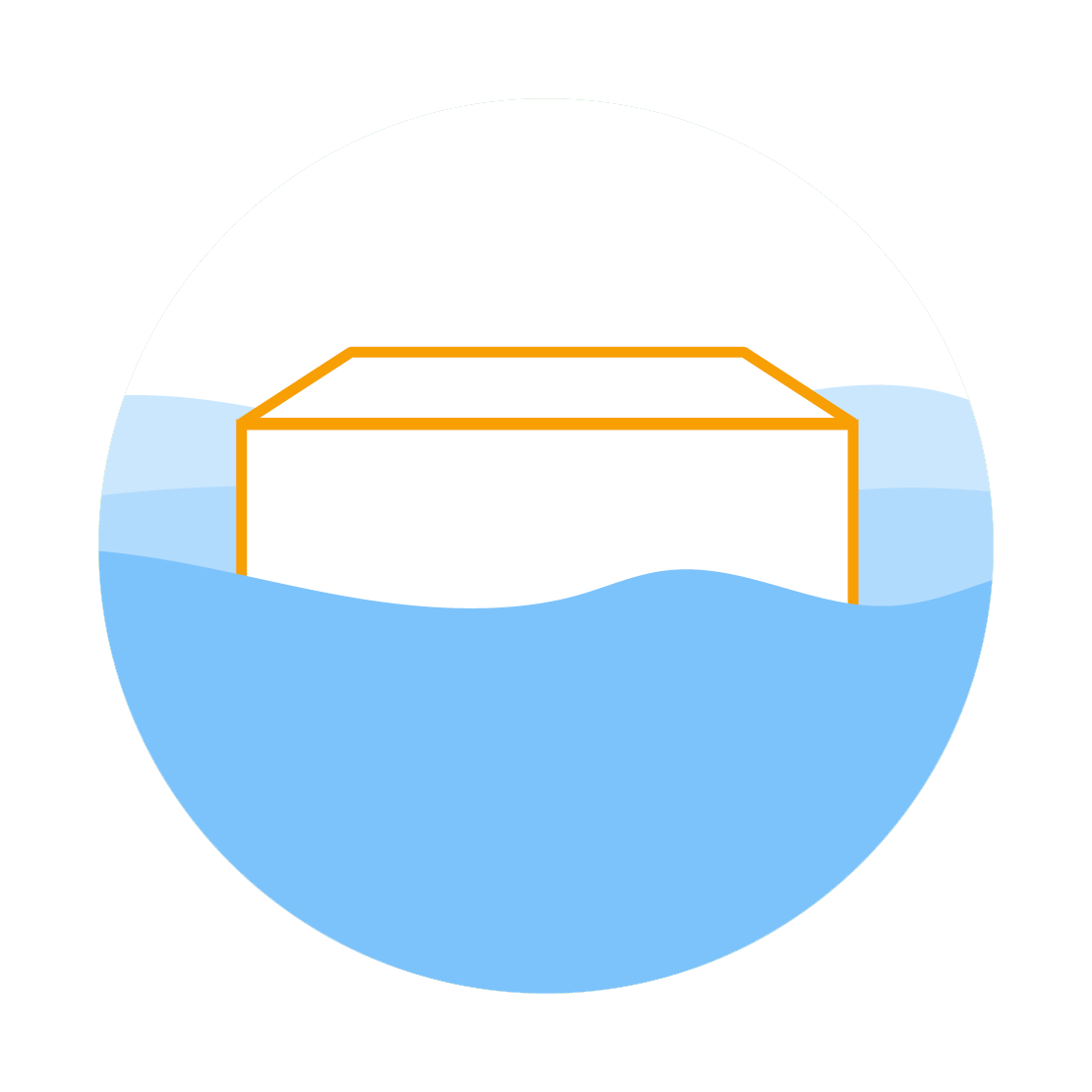
Seals on four sides. Anchored to the pad.
Survey & Measure
Document the equipment footprint, manufacturer service and airflow clearances, pad condition and your target flood protection height.
Custom Fabrication
Panels are cut to your footprint and built to height at our Pompano Beach, Florida facility, with a secure top panel to enclose the barrier.
Anchor & Seal
316L stainless anchors set into the concrete pad. Tightening the latch-locks compresses every seal against the slab and adjoining panels. The result is a secure, water-tight flood barrier with minimal permanent hardware and no permanent visible posts.
Why Protect Equipment from Flooding with CLAMSHELL™?
Fully Enclosed,
Watertight Seal
Compression seals at the base, corns and every panel joint creates a continuous barrier around equipment.

Custom Fit Panels,
Any Size Layout
Custom fabricated Composite Panels sized to specific areas or equipment enclosure.

Proven Panel Performance,
YellowFIN Panel Material
The same fiberglass reinforced honeycomb composite with aluminum framing, engineered for water pressure loads.

Impact & Debris Resistant, Strong Storm Defense
Composite panels and 6063-T6 aluminum framing are designed to handle strong storm debris impacts.

100% USA-Made & Fabricated,
U.S. Sourced Materials
Panels, extrusions, seals and hardware are manufactured in the U.S., & fabricated in Pompano Beach, FL.

Durable Materials,
Corrosion Resistant
Panels and frames will not warp, rust, crack or delaminate in tropical, coastal, or salt water conditions conditions.


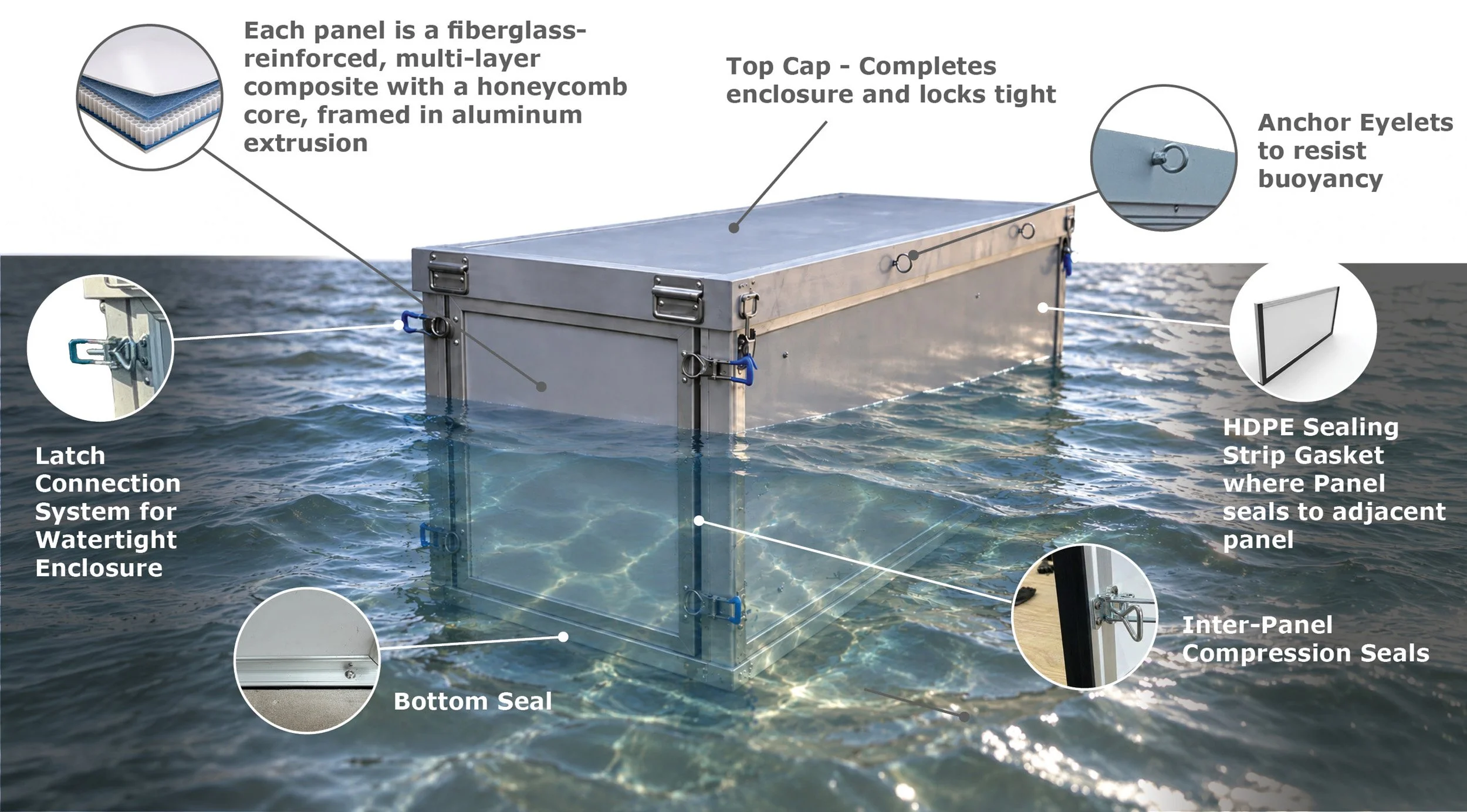
Flood Panel and Aluminum Frame Enclosure Engineering
Each CLAMSHELL panel is a fiberglass-reinforced, multi-layer composite with a honeycomb core, framed in aluminum extrusion. The frame reinforces every edge, spreading hydrostatic load evenly and preventing the panel from bowing under pressure.
*Confirm that your equipment pad and site can withstand the hydrostatic pressure of the design flood. Consult a local Professional Engineer for more information.
Specifications
Panel and Frame Extrusion Composition
Panel Material: Fiberglass Reinforced Composite Panel with honeycomb core.
Frame Material: 6063-T6 Anodized Aluminum.
Seals: HDPE gasket seals to wall and ground.
Panel Thickness: 2” + seals.
Standard Colors: Light Grey and White, custom colors and graphic printing available.
Hardware: 316L Marine-Grade Stainless Steel hardware, industrial stainless latch-lock system, plastic turn knobs with stainless threaded insert.

Keep Floodwater Away From Equipment
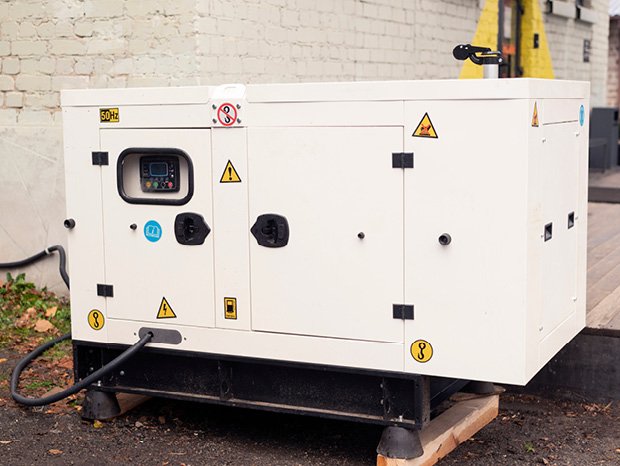
Standby & Backup Generators
Flood protection for generators used by residential, commercial and hospital facilities; transfer switch coverage on the same pad.
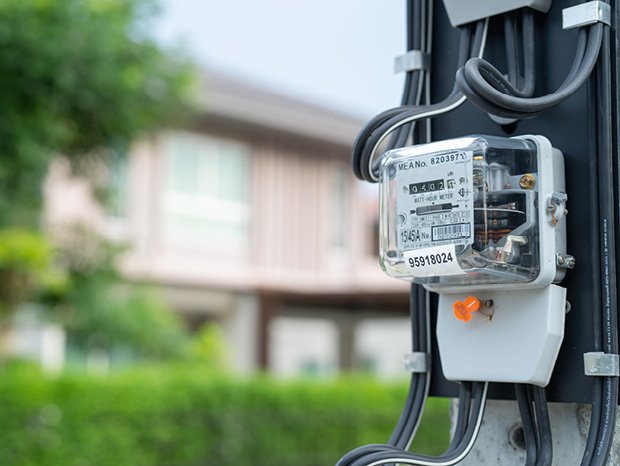
Electrical Panels & Meter Stations
Ground-level utility boxes, service panels, meter banks and electrical control cabinets.
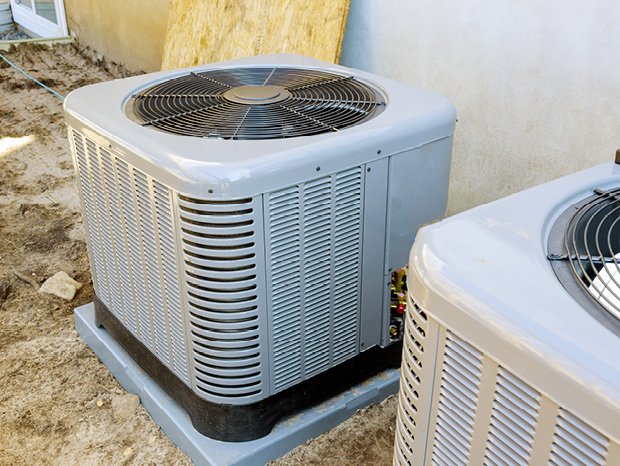
HVAC Condensers & Heat Pumps
Protect AC condenser units, heat pumps, mini split outdoor panels and packages HVAC from floodwaters and debris.
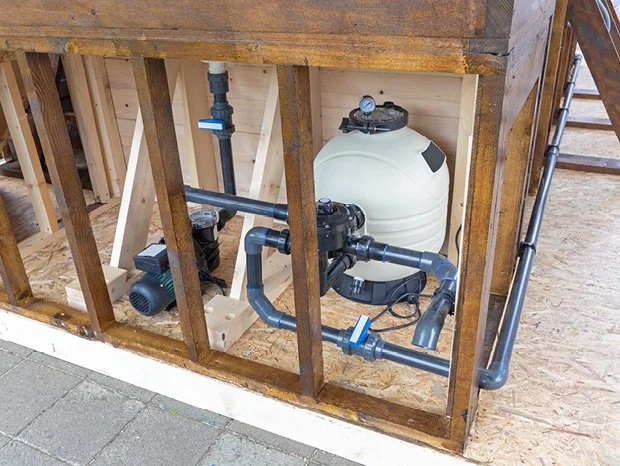
Pool, Pumps & Spa Equipment
Pool pumps, heaters, filters, plumbing units and controls at homes, condominiums and resorts.
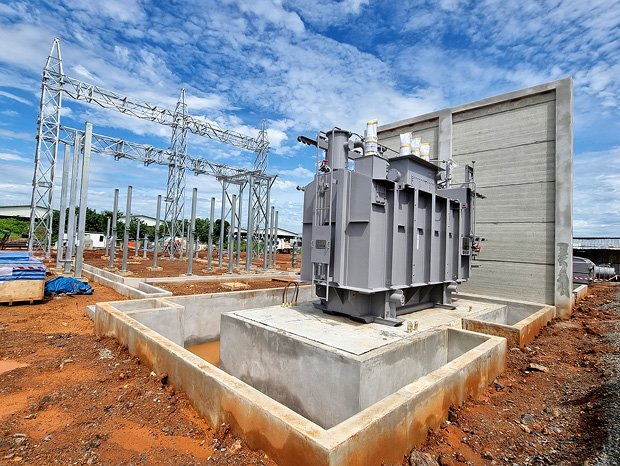
Transformers & Switchgear
Pad-mounted transformers, switchgear and electrical distribution equipment at substations and commercial sites.
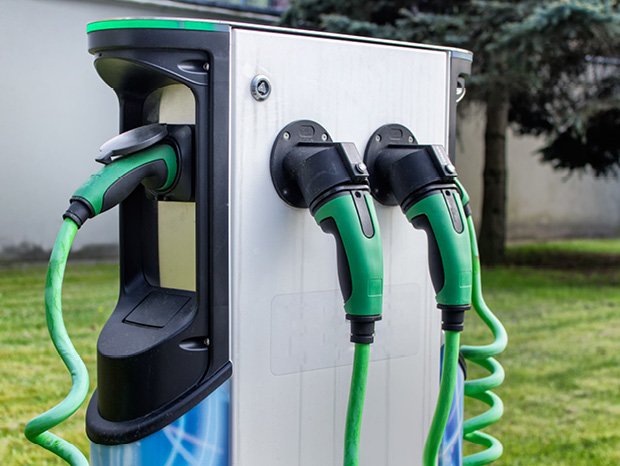
EV Charging Stations & Battery
Ground-mounted EV charging equipment, battery storage cabinets and solar inverters.
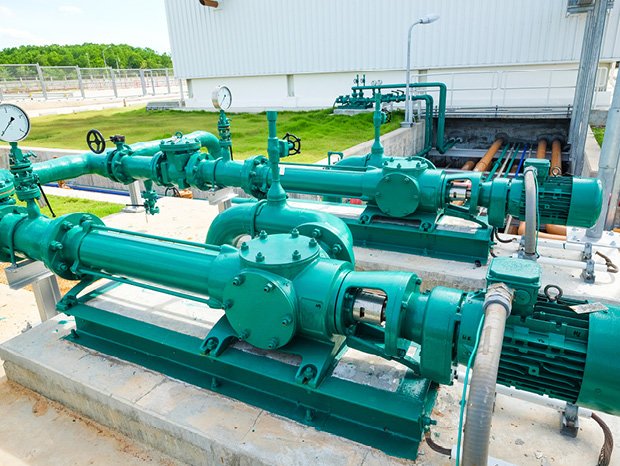
Utility Pumps & Lift Stations
Water and sewer pump controls, booster pumps and lift station equipment required to be running during a flood.
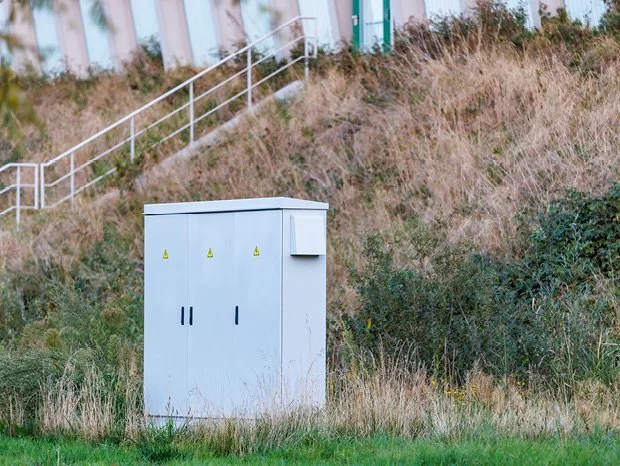
Data Cabinets & Telecom Units
Outdoor telecom enclosures, data centers, fiber optic cabinets and network equipment.
Get In Touch Today
Frequently Asked Questions
-
-
There are three ways to protect a standby generator from flooding: elevate it above the expected flood level, relocate it, or protect it in place with a watertight flood enclosure. For an existing generator, a CLAMSHELL™ enclosure is usually the most practical option. It anchors to the existing concrete pad and seals floodwater out on all sides, so fuel lines, wiring and the transfer switch stay where they are.
-
No. Generator manufacturers warn against starting or running a generator that has been submerged or is sitting in standing water. Water in the alternator, controller or engine can cause shorts, corrosion and electrocution hazards. Keeping floodwater from reaching the unit in the first place is the only reliable protection.
-
Not until it has been inspected. A generator that was submerged should be cleaned, dried and inspected by an authorized service dealer before it is started. The home or building should also be checked by a licensed electrician before the generator or utility power is turned back on.
-
FEMA guidance recommends placing equipment at or above the Design Flood Elevation, usually the Base Flood Elevation plus at least 1 foot of freeboard. When raising an existing generator isn’t practical, a flood enclosure built to the same protection height keeps water away from the unit without moving it.
-
The best flood barrier for a generator is one that encloses the whole unit, seals to the pad and still allows service access. CLAMSHELL™ uses fiberglass-reinforced composite panels, aluminum framing and compression seals to form a continuous watertight perimeter around the generator. Sandbags and temporary walls leave gaps, seep and take time to deploy.
-
Critical facilities protect emergency generators by elevating them, housing them in floodproofed rooms, or surrounding them with engineered flood barriers. For existing generators at hospitals, data centers and water plants, a watertight enclosure such as CLAMSHELL™ protects the generator from flood damage without relocating it, so it is ready to restore backup power once the water recedes.
-
To protect an outdoor AC condenser from flooding, either raise it on a platform above the expected flood level or surround it with a watertight flood enclosure. CLAMSHELL™ seals around the condenser on its existing pad, keeping floodwater, sand and silt out while leaving the refrigerant lines and electrical disconnect in place.
-
Floodwater can short-circuit the condenser’s electrical components, corrode the coil and compressor, and pack the unit with sand and silt. Even a brief submersion can cause hidden damage that leads to early failure. Turn off power at the breaker and have a licensed HVAC technician inspect the unit before restarting it.
-
Not always, but often. A technician must inspect the electrical parts, compressor and coil. Units that sat in salt water or for long periods frequently need full replacement. Preventing water from reaching the condenser costs far less than replacing an HVAC system after every major storm.
-
Yes. FEMA identifies flood walls, flood shields and flood panel enclosures to protect outdoor service equipment when elevation isn’t practical. CLAMSHELL™ is a custom-fit flood enclosure for condensers, heat pumps and packaged units, sized to keep the airflow and service clearances the manufacturer requires.
-
Commercial properties protect ground-level HVAC equipment, such as condensers, chillers, pumps and packaged units, by elevating it, relocating it to the roof, or enclosing it with engineered flood barriers. CLAMSHELL™ enclosures can be built around multiple units on a shared pad, protecting the full equipment yard in one closed perimeter.
-
Electrical equipment is protected from flooding by elevating it above the flood level, relocating it, or sealing it behind a watertight barrier. For ground-level panels, meters, switchgear and control cabinets, a CLAMSHELL™ enclosure keeps water out on every side, and the equipment stays connected on its existing pad.
-
Pad-mounted transformers and switchgear can be protected with a flood barrier that encloses the equipment and seals to the concrete pad. CLAMSHELL™ panels anchor to the pad with marine-grade stainless hardware and are custom-built to the equipment footprint. Check with your utility about clearance and access requirements before installation.
-
Pool pumps, heaters, filters and controls usually sit at ground level, which makes them some of the first equipment damaged in a flood. A CLAMSHELL™ enclosure sized to the equipment pad seals out floodwater and storm debris without re-plumbing or rewiring the system.
-
Pump control panels, motors and electrical gear at lift stations are expensive and slow to replace after a flood. A watertight CLAMSHELL™ enclosure keeps floodwater away from this equipment, so it is ready to return to service once the water recedes.
-
An equipment flood enclosure is a watertight barrier built around a single piece of outdoor equipment, such as a generator, HVAC condenser or transformer, rather than around a building opening. CLAMSHELL™ from Garrison Flood Control uses composite flood panels, aluminum corner extrusions and compression seals to close a sealed perimeter around the equipment on its pad.
-
Every CLAMSHELL™ enclosure is custom-built, so it can be made to whatever height your site requires. Garrison sizes each enclosure to your target flood protection elevation, which is typically the expected flood level plus freeboard.
-
No. A generator should not be operated while the CLAMSHELL™ enclosure is closed around it. CLAMSHELL is built to keep floodwater from reaching and damaging the equipment, so the generator is protected through the flood and ready to return to service once the water recedes and the panels are removed.
-
Sandbags seep, take time and labor to fill and place, and are thrown away after each use. CLAMSHELL™ is a reusable, engineered enclosure with compression seals that anchors to the pad, gives a continuous watertight seal, and stays in place or reinstalls in minutes.
-
CLAMSHELL™ panels release with latches, so a technician can remove one or more sides for maintenance and reinstall them in minutes. There are no permanent posts around the equipment.
-
CLAMSHELL™ uses the same materials as Garrison’s YellowFIN™ flood panels: fiberglass-reinforced composite panels with a honeycomb core, 6063-T6 anodized aluminum framing, HDPE compression seals and 316L marine-grade stainless steel hardware. Every component is made in the USA and fabricated in Pompano Beach, Florida.
-
Standard homeowners’ policies generally exclude flood damage, so a flooded generator or AC unit is usually a flood insurance claim, if it is covered at all. Coverage for equipment varies by policy, deductibles apply, and a claim doesn’t prevent the next flood. Check with your insurance agent about your specific policy.
-
FEMA’s guide to protecting building utility systems (FEMA P-348) describes three approaches for exterior equipment: elevate it, relocate it, or protect it in place with floodwalls or shields. Protect-in-place options like CLAMSHELL™ are suited to existing equipment where elevating or relocating isn’t practical.
-
Requirements vary by jurisdiction. Some municipalities need a permit for a permanently anchored barrier, and a licensed Professional Engineer should confirm that the pad and site can resist the hydrostatic pressure of the design flood. In mapped flood zones, check with your local floodplain administrator, especially for new construction, where elevation may be required.
-
Because every CLAMSHELL™ enclosure is custom-built, cost depends on the equipment footprint, the protection height and site conditions. Protecting equipment in place is typically far less disruptive than elevating or relocating it, because the pad, fuel lines, refrigerant lines and electrical connections stay as they are. Contact Garrison for a quote based on your equipment’s measurements.
-
CLAMSHELL™ installs with 1–2 people. The lightweight composite panels are positioned around the equipment, secured with bolts, and tightened to compress the seals against the pad. Each panel is latched together. Additional eyelets are on the top cap to anchor the system down in the event of high floodwater. Garrison also offers professional installation across Florida.
-
Contact Garrison with the pad dimensions, the clearance around each side of the unit, your target protection height, and photos from every side. A Garrison flood specialist can work with you to determine the right solution.
-
Contact us and speak with a flood specialist today to determine the number and type of panels that are right for you.
Our Mission

Protect
Protect the places and things that are most important
Block
Stop flooding in its tracks with a variety of solutions

Prepare
Become a trusted resource for all things flood preparedness and protection

Made In The USA
The CLAMSHELL Equipment Enclosure Panel System is
proudly Made in the USA